

Augmented Reality (AR) has emerged as a transformative technology with the potential to revolutionize various aspects of our lives, from entertainment and education to healthcare and industry. In this blog post, we delve into what AR is, its applications, the difference between AR and Virtual Reality (VR), the promise of AR glasses, and notable companies leading the charge in AR development.
What is Augmented Reality (AR)?
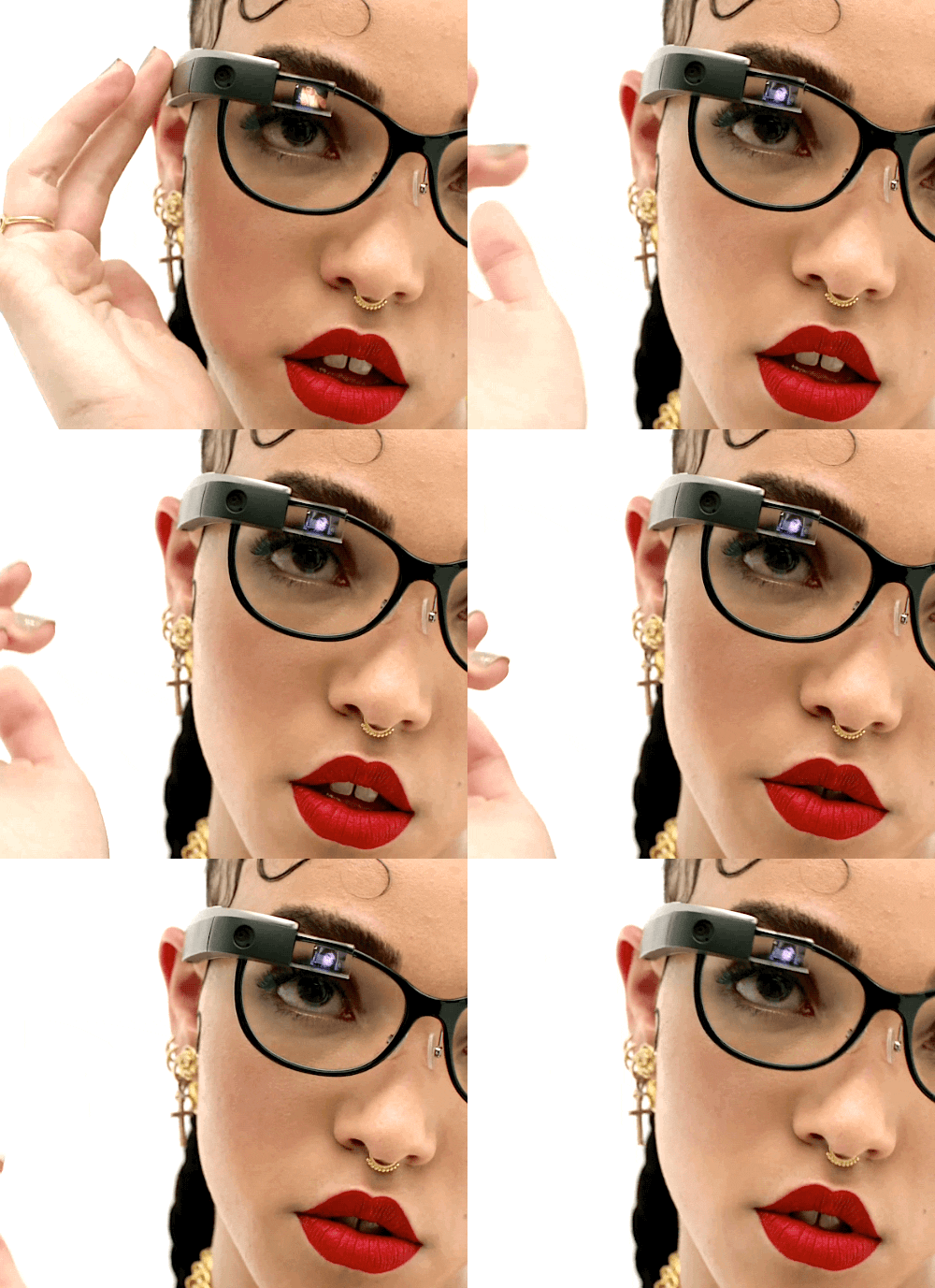
Augmented Reality integrates digital information or virtual objects into the real-world environment. Unlike Virtual Reality (VR), which immerses users in a completely virtual world, AR enhances the real world by overlaying digital content such as images, videos, or 3D models onto the user's view. This integration of virtual and real elements enables users to interact with both simultaneously, enhancing their perception of the environment.
Applications of AR
Gaming: AR gaming apps like Pokemon Go have popularized the concept of interacting with virtual creatures overlaid onto real-world locations, creating engaging and immersive gaming experiences.
Education: AR enhances learning by providing interactive simulations and visualizations. For example, medical students can use AR to visualize human anatomy in 3D overlaid onto a physical model or a real person's body.
Retail and Marketing: AR enables virtual try-on experiences for clothing and accessories, allowing customers to see how products look on themselves before making a purchase. Companies like IKEA use AR to visualize furniture in the customer's home before buying.
Healthcare: AR assists surgeons by overlaying patient data or virtual guides onto the surgical field, improving precision and reducing procedural risks.
Navigation: AR-based navigation apps can overlay directions and points of interest onto the real-world view, making it easier for users to navigate unfamiliar environments.
Companies Leading AR Development
Several tech giants and innovative startups are at the forefront of AR development:
Apple: With ARKit, Apple has enabled developers to create AR experiences for iOS devices. The company is rumored to be working on AR glasses that could integrate seamlessly with their ecosystem.
Google: Google's ARCore platform powers AR experiences on Android devices, supporting a wide range of applications from gaming to navigation.
Microsoft: Microsoft's HoloLens is a pioneering AR headset that overlays holographic images onto the user's field of view, finding applications in enterprise and education.
Snap Inc.: Known for Snapchat, Snap Inc. has been pushing AR technology with filters and lenses that overlay virtual effects onto users' faces and environments.
AR Glasses: Feasibility and Current Options
AR glasses hold immense promise for everyday use, offering a hands-free AR experience akin to wearing a pair of regular glasses. While early prototypes faced challenges such as bulkiness and limited battery life, advancements in miniaturization and battery technology are making AR glasses increasingly feasible.
Current AR Glasses:
Microsoft HoloLens: Targeted primarily at enterprise users, HoloLens offers a high-definition holographic experience with spatial sound and gesture control.
Google Glass Enterprise Edition: Google's AR glasses have found applications in industries like manufacturing and logistics, providing workers with hands-free access to information and assistance.
North Focals: These stylish AR glasses resemble regular eyeglasses but include a small display that shows notifications and information discreetly.
The Future of AR
As technology evolves, AR is poised to become more integrated into everyday life, offering personalized and interactive experiences across various domains. From enhancing productivity in the workplace to transforming how we learn, shop, and entertain ourselves, AR's potential to reshape our world is vast and exciting.
In conclusion, Augmented Reality represents a paradigm shift in human-computer interaction, blending the digital and physical realms in ways previously unimaginable. With ongoing advancements and investments from tech giants and startups alike, the future looks bright for AR as it continues to expand its footprint in our daily lives.


0 Comments